
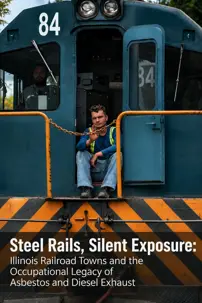
The Railroad Towns That Built Illinois — And the Occupational Diseases That Followed
For generations, the railroad industry formed the backbone of Illinois’ economy. Freight yards, locomotive shops, roundhouses, switching terminals, and repair facilities stretched across the state, connecting Chicago to the Mississippi River, the coal fields of southern Illinois, the factories of the Midwest, and the agricultural heartland of America.
Entire Illinois communities were built around the railroads. Families spent generations working for companies like the Illinois Central Railroad, Atchison, Topeka and Santa Fe Railway, Chicago, Burlington and Quincy Railroad, Union Pacific Railroad, Chicago and North Western Railway, Chicago, Rock Island and Pacific Railroad, Norfolk and Western Railway, and eventually modern carriers such as BNSF Railway, Canadian National Railway, and CSX Transportation.
Yet behind the enormous economic contributions of these railroad communities was a largely hidden occupational danger. Railroad workers routinely labored in environments saturated with:
- asbestos insulation,
- diesel exhaust,
- silica ballast dust,
- welding fumes,
- solvents,
- creosote,
- benzene-containing cleaners,
- and airborne industrial contaminants.
Decades later, many former railroad employees developed mesothelioma, lung cancer, laryngeal cancer, asbestosis, and other occupational illnesses tied to years of toxic exposure in rail yards and locomotive shops throughout Illinois.
Chicago: The Nation’s Rail Capital
No city in America was more important to railroading than Chicago. Nearly every major railroad converged in the city, creating an enormous network of:
- freight yards,
- interchange terminals,
- roundhouses,
- locomotive shops,
- repair facilities,
- and industrial spurs.
The city and surrounding suburbs became home to legendary rail facilities including:
- Clearing Yard,
- Cicero Yard,
- Proviso Yard,
- Burnside Shops,
- Corwith Yard,
- and Barr Yard.
Cicero and Corwith Yards
Cicero became synonymous with railroad freight operations. The massive Cicero Yard was historically tied to the Burlington system and later BNSF Railway, while Corwith Yard became one of the railroad’s premier intermodal facilities.
Workers at these facilities routinely repaired locomotives, maintained railcars, changed brakes, handled insulated mechanical components, and worked around continuously idling diesel engines. Many former workers later alleged chronic exposure to asbestos, diesel smoke, solvents, and welding fumes in poorly ventilated shop environments.
Proviso Yard
Located near Northlake and Melrose Park, Proviso Yard became one of the most important hump yards in the nation under the Chicago and North Western Railway and later Union Pacific Railroad.
Locomotive machinists, electricians, and carmen working at Proviso frequently performed maintenance on diesel locomotives incorporating asbestos-containing:
- gaskets,
- insulation,
- brake components,
- refractory materials,
- electrical systems,
- and thermal wraps.
Roundhouse and engine house workers often spent entire shifts surrounded by dense diesel exhaust trapped indoors during cold Midwest winters.
Burnside Shops and the Illinois Central
The Illinois Central Railroad operated extensive facilities on Chicago’s South Side, including the Burnside Shops near 95th Street. These shops employed generations of machinists, pipefitters, boilermakers, electricians, and laborers who rebuilt locomotives and railcars for decades.
Steam locomotives historically incorporated enormous quantities of asbestos insulation around boilers, pipes, and fireboxes. Even after dieselization, asbestos remained common in locomotive brakes, gaskets, floor tiles, wallboard, pipe coverings, and electrical systems.
Galesburg: Santa Fe Country
Galesburg became one of the Midwest’s premier railroad communities through its historic association with the Atchison, Topeka and Santa Fe Railway and later BNSF Railway.
Galesburg Yard evolved into a major classification and locomotive servicing facility. Workers there often spent decades exposed to:
- diesel exhaust,
- asbestos dust,
- ballast dust,
- solvents,
- and welding fumes.
Former employees working as:
- machinists,
- conductors,
- hostlers,
- electricians,
- laborers,
- and locomotive engineers
frequently worked around continuously running diesel engines inside enclosed facilities where fumes accumulated throughout the workday.
For many retired railroaders in Galesburg, mesothelioma and lung cancer diagnoses emerged decades after their careers ended.
East St. Louis, Dupo, and the Mississippi Gateway
The Metro East region became one of America’s most important freight interchange corridors because of its strategic Mississippi River crossings.
East St. Louis
East St. Louis hosted major operations involving:
- Terminal Railroad Association of St. Louis,
- Illinois Central Railroad,
- Norfolk and Western Railway,
- Missouri Pacific Railroad,
- and later modern freight carriers.
Railroad employees worked amid a combination of rail and heavy industrial exposures associated with nearby:
- steel mills,
- refineries,
- chemical plants,
- and manufacturing facilities.
Dupo Yard
Nearby Dupo became closely associated with Union Pacific Railroad and its sprawling Dupo Yard intermodal operations.
Former workers at Dupo reportedly experienced years of exposure to:
- diesel fumes,
- asbestos,
- silica,
- welding smoke,
- solvents,
- fuels,
- and creosote.
Many workers spent careers switching freight, servicing locomotives, and maintaining rail equipment in environments where airborne contaminants were considered simply part of railroad work.
Joliet and the Elgin, Joliet & Eastern Railway
Joliet became heavily intertwined with the Elgin, Joliet and Eastern Railway, commonly known as the EJ&E.
The railroad served steel mills, industrial facilities, and manufacturing plants throughout the Chicago industrial corridor. East Joliet Yard became a critical freight and switching location.
Workers there allegedly faced long-term exposure to:
- diesel exhaust,
- silica dust,
- asbestos,
- welding fumes,
- solvents,
- and creosote.
Railroad employees in industrial switching operations often worked near both locomotive exhaust and emissions from adjacent steel and refinery operations.
Centralia and Mattoon: Illinois Central Communities
Centralia was literally founded by the Illinois Central Railroad and developed into an important railroad division point.
Nearby Mattoon likewise became a major Illinois Central community tied to locomotive servicing and freight operations.
Railroad workers in these towns routinely performed:
- brake replacements,
- pipe insulation work,
- locomotive rebuilding,
- welding,
- and engine maintenance.
Steam-era locomotive systems relied heavily on asbestos-containing insulation because of its heat-resistant properties. During the diesel era, asbestos continued to be incorporated into brakes, gaskets, electrical panels, and engine insulation for decades.
Aurora, Eola Yard, and West Chicago
Aurora became one of the historic homes of the Chicago, Burlington and Quincy Railroad.
The Eola Yard complex later became a major BNSF Railway facility supporting freight classification and locomotive operations.
Nearby West Chicago — once known as “Junction” — served as a key interchange point where multiple railroads converged.
Employees in these communities frequently worked around:
- locomotive rebuilds,
- diesel servicing operations,
- insulated boilers,
- brake systems,
- and asbestos-containing mechanical equipment.
Rock Island and the Mississippi Corridor
Rock Island became nationally associated with the Chicago, Rock Island and Pacific Railroad.
Rail yards and repair facilities along the Mississippi River corridor employed generations of railroad workers responsible for maintaining freight and passenger equipment.
Like many railroad systems operating through the mid-twentieth century, Rock Island operations relied heavily upon asbestos-containing insulation and brake materials. Workers in repair shops and locomotive facilities often handled these products directly during routine maintenance work.
Danville and the Conrail Connection
Danville served as another important railroad and coal transportation community.
Historical records involving Conrail asbestos locations identified asbestos-containing materials at Hillery Yard in Danville, including friable asbestos insulation in railroad buildings.
Workers in car departments and maintenance buildings frequently encountered airborne insulation dust while performing routine repairs and maintenance.
Blue Island and Harvey
South suburban Blue Island and Harvey became major switching and industrial railroad communities tied to:
- freight interchange operations,
- steel production,
- and manufacturing traffic.
Railroad employees working these corridors often spent careers around idling diesel locomotives, industrial smoke, and railcar repair operations involving asbestos-containing materials.
Decatur, Bloomington, and Champaign
Central Illinois communities including Decatur, Bloomington, and Champaign also became important railroad centers because of agriculture, manufacturing, and freight movement.
Railroad companies operating through these cities historically included:
- Wabash Railroad,
- Illinois Central Railroad,
- Chicago and Alton Railroad,
- and later modern freight carriers.
Workers in locomotive servicing facilities and freight yards throughout these communities encountered many of the same occupational exposures seen elsewhere across the railroad industry.
The Lasting Human Cost
Mesothelioma and occupational lung cancer often emerge decades after exposure. A railroad machinist who inhaled asbestos fibers in the 1960s may not receive a diagnosis until retirement age. Likewise, workers exposed to diesel exhaust over years inside roundhouses, repair pits, and locomotive cabs may later develop lung cancer or other respiratory disease long after leaving the railroad industry.
Studies and occupational investigations have repeatedly identified elevated asbestos-related disease risks among railroad workers, particularly those employed in:
- locomotive shops,
- engine houses,
- roundhouses,
- car repair facilities,
- brake departments,
- and rail yards.
Illinois’ railroad towns helped build America’s industrial economy. They moved coal, steel, grain, automobiles, livestock, and manufactured goods across the nation for generations. The workers who kept those rail systems operating did so with extraordinary pride and sacrifice.
For many families throughout Illinois, however, the railroad legacy is now also measured in mesothelioma diagnoses, lung cancer treatments, and the lasting consequences of years spent breathing asbestos dust and diesel exhaust in the service of the rail industry.
Relief is Available
Our firm recognizes the enormous role Illinois railroad towns and railyards played in building the nation’s industrial and economic strength during some of America’s most transformative decades. The machinists, conductors, electricians, laborers, engineers, and countless other railroad workers who kept freight moving across the Midwest helped power the growth of entire industries and communities, often at great personal sacrifice. Today, as many of those proud workers and their families face mesothelioma, lung cancer, and other occupational diseases tied to years of asbestos and diesel exhaust exposure, our firm stands committed to supporting them and pursuing the accountability and justice they deserve.