
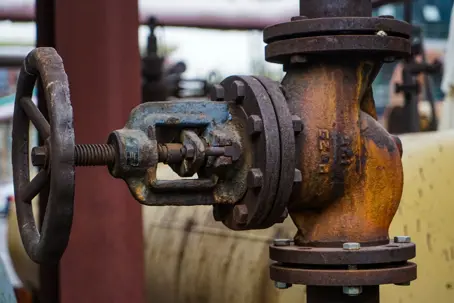
In industrial settings across the country, gaskets and packing have long been viewed as routine, even unremarkable components—essential for sealing pipes, valves, pumps, and high-pressure systems. Because these materials were often “encapsulated” and frequently manufactured with chrysotile (or “white”) asbestos, they have sometimes been characterized as low-risk. But that narrative, while convenient, overlooks the real-world conditions in which these products were used—and the very real dangers they posed to workers.
The Composition Argument: Fiber Type and Encapsulation
It is true that many gasket and packing products historically utilized chrysotile asbestos, a fiber type that differs in structure from amphibole forms such as amosite or crocidolite. It is also true that these fibers were often bound within a matrix—rubber, graphite, or other materials—creating what is commonly referred to as “encapsulation.”
In theory, these factors could reduce the likelihood of fiber release if the product remained intact and undisturbed. But industrial workplaces are not static environments, and these materials were rarely left untouched.
Real-World Use: Cutting, Removing, Replacing
The risk associated with gaskets and packing becomes clear when examining how they were actually used.
Workers routinely:
- Cut gaskets from asbestos sheet material
- Scraped old gasket residue from flanges
- Removed and replaced packing in valves and pumps
- Sanded or wire-brushed surfaces to ensure a proper seal
Each of these tasks had the potential to disturb the material and release respirable asbestos fibers into the air. Unlike sealed, undisturbed products, these activities generated dust—often directly in the worker’s breathing zone.
Over the course of a career, these exposures were not isolated. They were repeated, routine, and cumulative.
The “Low-Dose” Misconception
A common defense surrounding gasket and packing exposure is that any fiber release is minimal—too low to cause disease. But this argument ignores a critical reality: occupational exposure is measured over time, not in single events.
Even relatively small releases, when repeated day after day over years or decades, can result in significant cumulative exposure. Workers in refineries, steel mills, power plants, and shipyards often handled these materials regularly, making the “low-dose” characterization misleading in practice.
Medical Reality: Disease Does Not Distinguish the Source
From a medical standpoint, the body does not differentiate between fibers released from insulation, gaskets, or packing. Once inhaled, asbestos fibers can lodge in the lungs or pleura, where they may remain for decades.
The consequences—mesothelioma, lung cancer, and other asbestos-related diseases—are well-documented and severe. These diseases are defined not by the label of the product, but by the presence and persistence of asbestos fibers in the body.
A Risk That Should Not Be Minimized
Focusing solely on fiber type or encapsulation risks obscuring the larger truth: the danger lies in exposure. And for countless workers, gasket and packing materials were a consistent and unavoidable source of that exposure.
Minimizing that risk based on laboratory conditions or selective characterizations does not reflect the lived experience of those who installed, removed, and replaced these materials under real-world industrial conditions.
The history of asbestos use in gaskets and packing is not one of harmless utility—it is one of overlooked exposure pathways that, over time, contributed to serious and often fatal disease.
Regardless of how exposure is characterized—by fiber type, encapsulation, or selective expert opinion—our firm remains unwavering in its commitment to stand with and advocate for every worker harmed by asbestos, pursuing accountability and justice wherever the evidence leads.