
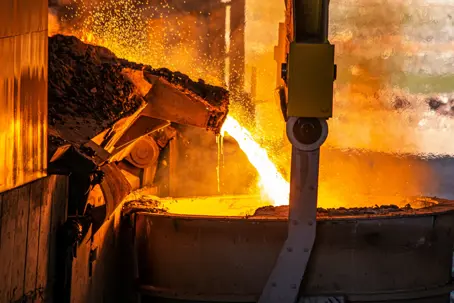
Buried in Steel: The Hidden Asbestos Exposure of America’s Mill Workers—From Illinois to Northwest Indiana
For much of the 20th century, steel mills across Illinois and Northwest Indiana powered the nation’s industrial growth. From the Calumet Region to the mills lining the Des Plaines River, these facilities operated around the clock—producing the steel that built cities, railroads, and infrastructure. But embedded within that progress was a largely invisible hazard: pervasive asbestos use across nearly every aspect of steel production.
A Regional Legacy of Exposure
The risk was not theoretical—it was concentrated in some of the most prominent industrial facilities in the Midwest.
In Northwest Indiana, the massive U.S. Steel Gary Works in Gary employed tens of thousands of workers and relied heavily on asbestos insulation in blast furnaces, coke ovens, boilers, and piping systems for decades. Workers encountered asbestos in furnace linings, pipe coverings, gaskets, and heat shields, often during routine maintenance and repairs.
Nearby facilities—including Inland Steel’s East Chicago plant (later part of ArcelorMittal Indiana Harbor) and other major mills in Burns Harbor and Portage—used similar asbestos-containing materials throughout high-heat operations and mechanical systems.
Illinois facilities were no exception. U.S. Steel’s Granite City Works and the historic Joliet-area steel and coke operations—closely tied to the broader Gary Works system—exposed workers to the same asbestos-laden environments, particularly in coke ovens, boiler houses, and auxiliary systems running at extreme temperatures.
Across this corridor, asbestos was not confined to isolated tasks—it was integral to the infrastructure itself.
A Workplace Built on Asbestos-Containing Materials
Steel production demanded intense heat control, making asbestos a standard industrial material. It appeared in:
- Piping systems wrapped in asbestos insulation and sealed with gaskets and packing from manufacturers such as Garlock, John Crane, and Anchor Packing
- Boilers and steam systems insulated with asbestos cement, refractory materials, and block insulation
- Pumps and valves containing asbestos packing and internal sealing components
- Cooling towers and auxiliary systems utilizing asbestos insulation in structural and mechanical components
Routine work—cutting pipe insulation, replacing gaskets, or servicing valves—released asbestos fibers into the air, often in enclosed environments with little ventilation.
Coke Ovens, Furnaces, and High-Heat Operations
The highest exposures often occurred in the hottest parts of the mill.
Coke ovens, blast furnaces, and soaking pits were lined with asbestos-containing refractory brick and insulation. In places like Gary Works and Inland Steel, these systems operated continuously, requiring frequent maintenance that disturbed aging asbestos materials.
Hot tops and casting equipment used asbestos insulation to regulate cooling, while furnace relining and repair work generated significant dust exposure. These were not occasional events—they were routine aspects of keeping the mill operational.
Friction Products and Mobile Equipment
Beyond stationary systems, asbestos was embedded in friction products—including brake linings and clutch facings used in cranes, rail systems, and heavy equipment throughout steel plants.
Every stop, start, and repair of this equipment created additional opportunities for airborne exposure—often in areas where workers had no reason to expect it.
Gaskets, Packing, and Daily Exposure
Perhaps the most consistent exposure came from the most routine tasks.
Gaskets and packing materials—used in nearly every mechanical connection—contained significant asbestos content and required constant replacement. Workers frequently:
- Cut gaskets from asbestos sheets
- Removed degraded packing from valves and pumps
- Reinstalled new asbestos-containing components
These tasks released concentrated dust directly into workers’ breathing zones, turning everyday maintenance into a long-term health risk.
The Lasting Consequences
The defining feature of asbestos exposure in steel mills is its delay. Diseases like mesothelioma and lung cancer often develop decades after exposure—meaning many workers from facilities in Gary, East Chicago, Granite City, and Joliet are only now confronting diagnoses tied to careers that ended long ago.
What makes this history particularly troubling is its scale and invisibility. Asbestos was not limited to a single product or department—it was embedded throughout entire facilities, exposing not only insulators and pipefitters, but electricians, laborers, supervisors, and bystanders alike.
Across Illinois and Northwest Indiana, the legacy of steel is inseparable from this hidden risk. The mills built the backbone of American industry—but for many workers, they also left behind a lasting and often deadly footprint that would not surface until decades later.
Across Illinois and Northwest Indiana, our firm remains steadfast in its commitment to pursue justice for steelworkers harmed by decades of asbestos exposure—holding accountable those responsible and advocating tirelessly for workers and families throughout this entire industrial corridor.