
A Rail City’s Quiet Toll: Mesothelioma, Lung Cancer, and the Legacy of East St. Louis
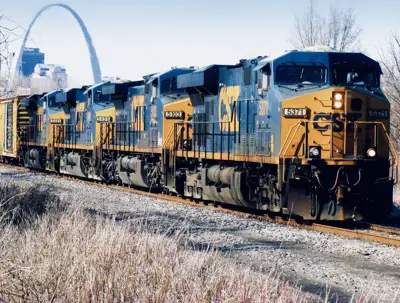
East St. Louis, Illinois, once stood as one of the most important railroad crossroads in the United States. Positioned along the Mississippi River directly opposite St. Louis, Missouri, the city developed into a dense industrial and transportation center where multiple major rail lines converged. Rail yards, switching stations, repair shops, and freight terminals defined the landscape, and generations of railroad workers took pride in keeping freight moving through the heart of the Midwest.
But beneath that legacy of industrial strength was a long-standing exposure to two of the most consequential occupational hazards in railroad history: diesel exhaust and asbestos. Over time, these exposures have been linked to serious illnesses—including mesothelioma and lung cancer—emerging decades after workers left the rails behind.
A City Shaped by Rail Traffic and Heavy Industry
East St. Louis became a railroad hub in the late 19th and early 20th centuries, serving as a critical junction for freight moving east, west, north, and south. Major rail companies maintained extensive operations in and around the city, including switching yards and maintenance facilities that ran around the clock.
Railroad workers—conductors, brakemen, machinists, pipefitters, electricians, and laborers—worked in environments dominated by locomotives, heavy equipment, and industrial repair operations. The scale of activity meant constant exposure to diesel-powered engines and the infrastructure required to maintain them.
Diesel Exhaust: An Invisible but Constant Exposure
For railroad workers in East St. Louis, diesel exhaust was not an occasional hazard—it was a daily reality. Locomotives idled for extended periods in rail yards and enclosed or semi-enclosed maintenance areas, producing concentrated emissions.
Workers were exposed during:
- Switching operations in rail yards with continuous locomotive movement
- Maintenance and repair work around running engines
- Inspection and coupling tasks performed near exhaust sources
- Time spent in enclosed shops with inadequate ventilation
Modern research has established diesel exhaust as a carcinogen associated with increased risks of lung cancer and other respiratory diseases. For railroad workers who spent decades in these environments, exposure was often prolonged and unavoidable.
Asbestos in Rail Infrastructure and Equipment
Alongside diesel exhaust, asbestos was widely used throughout railroad systems for its heat-resistant and insulating properties. In East St. Louis rail operations, asbestos could be found in:
- Locomotive boiler and engine insulation
- Brake pads and friction materials
- Pipe covering and thermal insulation in maintenance shops
- Gaskets, seals, and mechanical components
- Building materials in roundhouses and repair facilities
Exposure occurred when workers:
- Repaired or replaced insulated engine components
- Disturbed brake systems during maintenance
- Cut or removed asbestos-containing gaskets and seals
- Worked in shops where insulation dust accumulated over time
These tasks often released microscopic fibers into the air, particularly in older facilities where protective controls were limited or nonexistent.
The Long Latency of Disease
One of the most tragic aspects of these exposures is the time delay between contact and illness. Diseases such as mesothelioma and asbestos-related lung cancer often take 20 to 50 years or more to develop.
For many East St. Louis railroad workers, this means:
- A career spent in physically demanding and hazardous conditions
- Retirement followed by decades of apparent good health
- A later-life diagnosis of mesothelioma or lung cancer
- Families confronting illness long after employment ended
Diesel exhaust exposure compounds these risks, particularly for lung cancer, creating overlapping occupational hazards that accumulate over a worker’s lifetime.
A Workforce Defined by Skill and Pride
Railroad workers in East St. Louis were part of a deeply skilled and tightly connected workforce. The work was physically demanding and technically complex, requiring precision, endurance, and coordination. Many workers took immense pride in their roles—keeping freight moving through one of the nation’s most important rail corridors.
Yet that same dedication often meant sustained exposure to hazards that were not fully understood or adequately controlled at the time. What was considered routine maintenance or standard working conditions is now recognized as a source of long-term health consequences.
The Legal and Medical Legacy
As medical science has advanced, the link between occupational exposures and diseases like mesothelioma and lung cancer has become clearer. Railroad workers exposed to asbestos and diesel exhaust in East St. Louis have become part of a broader national pattern of occupational disease recognition and litigation.
Claims involving these workers often focus on:
- Asbestos exposure in rail equipment and facilities
- Diesel exhaust exposure in rail yards and shops
- Failure to warn or protect workers from known hazards
- The cumulative impact of multiple occupational exposures
These cases have helped bring attention to the lasting effects of railroad work environments and the importance of accountability for historical exposure conditions.
Relief is Available
Today, as cases of mesothelioma and lung cancer continue to emerge among former railroad employees, the legacy of diesel exhaust and asbestos exposure serves as a reminder of the hidden costs carried by those who kept the nation’s rail system running.
Our firm is committed to standing with East St. Louis railroad retirees and their families as they confront the long-term consequences of occupational exposure. We work to hold responsible parties accountable for the harms linked to diesel exhaust, asbestos, and other hazardous conditions encountered over decades of service. In doing so, we seek meaningful justice for workers whose dedication helped build and sustain a vital rail hub.