
Louisiana’s Cancer Alley: Mesothelioma, Asbestos Exposure, Lung Cancer, and the Ongoing Fight for Environmental Justice
Louisiana’s “Cancer Alley” has become one of the most recognized examples in the United States of the collision between industrial expansion, environmental exposure, and racial inequality. Stretching along the Mississippi River between Baton Rouge and New Orleans, this heavily industrialized corridor contains refineries, petrochemical facilities, plastics manufacturers, chemical plants, hazardous waste operations, and industrial storage sites operating near long-established residential communities.
For decades, residents have raised concerns regarding elevated cancer rates, asbestos exposure, refinery emissions, toxic chemical releases, and chronic respiratory disease allegedly linked to nearby industrial activity. Families throughout the corridor have watched neighbors, coworkers, and loved ones develop mesothelioma, asbestos-related lung cancer, pulmonary disease, and other serious illnesses while living or working near some of the nation’s largest petrochemical facilities.
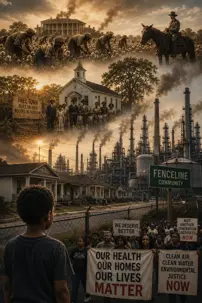
The story of Cancer Alley is not simply about pollution. It is deeply tied to Louisiana’s history of slavery, segregation, industrial development, and the transformation of historic Black communities into modern “fenceline communities” situated directly beside major industrial operations.
From Louisiana’s Sugar Empire to Modern Industrial Corridors
Long before refineries and petrochemical facilities dominated the Mississippi River corridor, the region served as the center of Louisiana’s sugar plantation economy. Wealth generated by sugar production depended heavily upon enslaved labor and some of the harshest plantation conditions in the American South.
Following emancipation, many formerly enslaved families remained in the region and established independent Black communities built around churches, schools, farmland, and multigenerational family networks. These communities represented stability, self-governance, and survival in the aftermath of slavery and Reconstruction.
During the twentieth century, however, industrial development rapidly transformed the landscape. Oil refineries, chemical plants, fertilizer facilities, plastics manufacturers, and petrochemical operations expanded throughout the corridor because of the region’s access to the Mississippi River, transportation infrastructure, and energy resources.
Over time, many of the historic Black communities that once stood as symbols of post-slavery independence became surrounded by industrial infrastructure. Environmental advocates now commonly refer to these neighborhoods as “fenceline communities” because homes, schools, churches, and parks are often located immediately adjacent to industrial sites emitting pollutants into the surrounding environment.
Critics argue that these development patterns reflect longstanding environmental racism in which predominantly Black communities disproportionately absorbed the risks associated with hazardous industrial expansion.
Cancer Risks and Toxic Exposure in Cancer Alley
Federal environmental reviews and public health analyses have repeatedly identified portions of Cancer Alley as presenting significantly elevated estimated cancer risks compared to many other regions of the country.
Communities located near industrial facilities have raised concerns regarding exposure to:
- benzene,
- chloroprene,
- vinyl chloride,
- formaldehyde,
- ethylene oxide,
- sulfur compounds,
- particulate matter,
- and other industrial byproducts associated with refinery and petrochemical operations.
Many of these substances are recognized carcinogens or respiratory hazards under certain exposure conditions.
Residents throughout the corridor have alleged that years of cumulative exposure to multiple industrial emissions sources contributed to unusually high levels of:
- lung cancer,
- blood cancers,
- respiratory illness,
- chronic pulmonary disease,
- and other long-term health problems.
The concerns voiced by residents are not based solely upon isolated spills or accidental releases. Rather, many advocacy groups argue that the danger stems from continuous long-term exposure to emissions generated by numerous industrial facilities operating in close proximity to residential neighborhoods.
Asbestos Exposure in Louisiana Refineries and Petrochemical Facilities
Although public discussion surrounding Cancer Alley frequently centers on airborne chemical emissions, asbestos exposure represents another major occupational hazard historically associated with the region’s industrial facilities.
For decades, asbestos-containing materials were heavily used throughout:
- oil refineries,
- chemical plants,
- petrochemical facilities,
- power generation stations,
- industrial boilers,
- pipe insulation systems,
- turbines,
- valves,
- pumps,
- refractory products,
- and industrial construction materials.
Asbestos became widely utilized because of its resistance to heat, fire, and chemical degradation. Unfortunately, countless workers throughout Louisiana’s industrial corridor allegedly encountered dangerous asbestos fibers while performing routine job duties.
Occupations commonly associated with refinery asbestos exposure and petrochemical asbestos exposure include:
- refinery workers,
- pipefitters,
- insulators,
- electricians,
- boilermakers,
- welders,
- maintenance mechanics,
- industrial contractors,
- shipyard workers,
- millwrights,
- and construction laborers.
Exposure frequently occurred during:
- maintenance shutdowns,
- insulation removal,
- pipe repairs,
- demolition work,
- equipment replacement,
- and industrial construction projects.
Many workers allege they were never adequately warned regarding the dangers of asbestos exposure or provided proper respiratory protection.
Mesothelioma and Asbestos-Related Lung Cancer
Mesothelioma is an aggressive cancer strongly associated with asbestos exposure. The disease often develops decades after exposure occurs, meaning retired refinery workers, chemical plant employees, and industrial laborers may only receive a diagnosis many years after leaving the worksite.
Individuals exposed to asbestos in Louisiana refineries or petrochemical facilities may later develop:
- pleural mesothelioma,
- peritoneal mesothelioma,
- asbestos-related lung cancer,
- asbestosis,
- pleural thickening
EPA Superfund Sites and Industrial Contamination
Louisiana contains numerous EPA Superfund sites involving hazardous waste disposal, industrial contamination, chemical releases, and environmental remediation efforts.
Several contaminated locations associated with industrial operations and hazardous waste management are situated within or near the broader industrial corridor, including:
- Petro-Processors of Louisiana,
- Bayou Bonfouca,
- Delatte Metals,
- Southern Shipbuilding,
- and additional former industrial waste sites.
These sites reflect Louisiana’s long industrial history and continuing concerns regarding:
- groundwater contamination,
- airborne toxic exposure,
- hazardous waste migration,
- soil contamination,
- and long-term public health risks.
Environmental Justice and Corporate Accountability
For many residents and advocates, Cancer Alley represents more than industrial pollution. It reflects the continuing intersection of race, economics, land use, and environmental risk.
Communities descended from formerly enslaved people now live beside some of the nation’s largest petrochemical and refining operations. Critics argue that decades of permitting decisions and industrial expansion disproportionately exposed Black communities to environmental hazards while providing limited protections against long-term health risks.
Victims diagnosed with mesothelioma, asbestos-related lung cancer, occupational cancer, or toxic exposure illnesses may possess legal claims involving:
- occupational asbestos exposure,
- refinery asbestos exposure,
- petrochemical exposure,
- premises liability,
- environmental contamination,
- industrial negligence,
- and failure to warn regarding hazardous substances.
These cases often require extensive investigation into industrial operations, asbestos-containing products, contractor records, maintenance procedures, and historical exposure conditions.
Standing Up for Victims of Mesothelioma and Toxic Exposure
Individuals diagnosed with mesothelioma, asbestos-related lung cancer, or occupational disease deserve experienced legal representation capable of investigating decades-old industrial exposure histories.
Our firm understands the devastating impact toxic exposure can have on workers and families who spent years contributing to America’s industrial economy while allegedly being exposed to dangerous substances without adequate protection.
Mesothelioma litigation, refinery asbestos cases, and toxic tort claims demand aggressive investigation, detailed occupational analysis, and a willingness to hold powerful corporations accountable.
Workers and families deserve answers regarding:
- where exposure occurred,
- what companies knew,
- whether adequate protections existed,
- and whether preventable hazards contributed to life-altering disease.
Relief is Available
Cancer Alley represents one of the most striking examples in America of how historical inequality, industrial development, and environmental exposure can intersect across generations.
What began as plantation land worked by enslaved laborers eventually transformed into a massive petrochemical corridor lined with refineries, chemical plants, hazardous waste sites, and industrial facilities.
For victims of mesothelioma, asbestos exposure, lung cancer, and toxic chemical exposure, the consequences are not political abstractions. They are personal, permanent, and often devastating.
No community should be expected to sacrifice its health, safety, or future in exchange for industrial profit