
An Industrial Legacy and a Deadly Aftermath: The Mesothelioma Crisis Linked to a Bellwood Manufacturing Plant
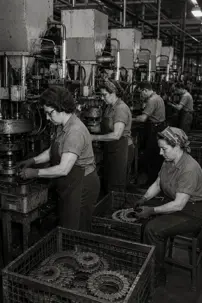
In the quiet suburb of Bellwood, a mid-century manufacturing facility once symbolized economic growth and opportunity. Like many industrial operations that flourished across Illinois in the post-war era, the plant provided steady employment and helped fuel the region’s development. But for many former workers and their families, that opportunity has carried a devastating and long-lasting cost—one measured in diagnoses of mesothelioma decades after the work ended.
Today, the site is increasingly associated with what many describe as a localized “epidemic” of asbestos-related disease.
A Workplace Built on Hazardous Materials
During its peak operating years—particularly from the 1950s through the 1980s—the Bellwood facility manufactured industrial and automotive components that, like many products of that era, incorporated asbestos. The mineral was prized for its heat resistance and durability, making it a common ingredient in friction products, insulation, and high-performance materials.
Inside the plant, asbestos fibers were often handled in raw form or embedded in components that were cut, ground, or manipulated during production. These processes released microscopic fibers into the air—fibers that workers unknowingly inhaled day after day.
At the time, awareness of the dangers of asbestos exposure was limited among workers, and protective measures were often minimal or nonexistent. As has been documented across numerous industrial sites in Illinois, asbestos dust frequently accumulated on surfaces, clothing, and even in workers’ hair—creating both direct and secondary exposure pathways.
The Long Latency of Mesothelioma
Mesothelioma is a rare and aggressive cancer almost exclusively linked to asbestos exposure. One of its most insidious characteristics is its latency period: symptoms often do not appear until 20 to 50 years after exposure.
This delay has created a tragic pattern in Bellwood and similar communities:
- Workers who left the plant decades ago are only now being diagnosed
- Families are confronting illnesses long after the original exposure occurred
- Entire clusters of former employees have developed similar diseases over time
This phenomenon is not unique to one facility, but Bellwood has become a notable example of how concentrated occupational exposure can translate into concentrated disease decades later.
A Community Impact Beyond the Factory Walls
The effects of asbestos exposure rarely stop at the workplace. In many industrial settings, workers inadvertently carried fibers home on their clothing, exposing spouses and children. Environmental contamination has also been a concern in former industrial zones, where redevelopment efforts have sometimes uncovered hazardous materials requiring costly remediation.
In Bellwood, where industrial development expanded rapidly in the mid-20th century, factories were often located close to residential neighborhoods. This proximity increased the potential for broader community exposure—whether through airborne dust, waste disposal practices, or secondary contact.
What Makes This an “Epidemic”?
The term “epidemic” is not used lightly. It reflects several converging realities:
- A concentrated workforce exposed over many years
- Consistent use of asbestos-containing materials in manufacturing processes
- A predictable pattern of disease emerging across a defined group of workers
- Ongoing diagnoses decades after exposure ceased
Across Illinois, industrial asbestos exposure has led to widespread illness, particularly in sectors involving heavy machinery, insulation, and manufacturing. The Bellwood plant stands as a stark example of how those risks played out in a single location.
A Legacy Still Unfolding
Even as the facility itself fades into history, its impact continues to unfold in courtrooms, medical offices, and families across the region. Former workers—many of whom spent years contributing to the industrial economy—are now confronting life-altering diagnoses tied to that same work.
Their stories underscore a broader truth about asbestos: its dangers were not confined to a moment in time. They were embedded in the very fabric of industrial progress, only to surface decades later in the form of serious disease.
Looking Forward
Understanding what happened in Bellwood is not just about the past—it is about accountability, awareness, and prevention. As more cases come to light, the focus remains on ensuring that those affected receive answers and, where appropriate, compensation.
The legacy of this plant is a reminder that the true cost of industrial success is sometimes hidden—only becoming visible years later, in ways no worker could have anticipated. Our firm’s deep understanding of the historical link between specific workplace locations, asbestos exposure, and resulting cases of mesothelioma uniquely equips us to uncover critical evidence and pursue justice on behalf of former employees.