
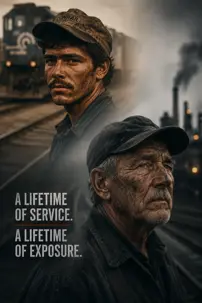
Off the Rails: How the Industry Derails Justice for Retired Workers Facing Cancer
For many retired railroad workers, a cancer diagnosis is not simply a matter of misfortune—it is the foreseeable result of decades spent working in an environment saturated with toxic exposures. From asbestos insulation and diesel exhaust to chemical solvents and silica dust, the railroad industry has long been intertwined with substances now known to cause serious, often fatal disease. Yet when these workers seek accountability, they are too often met with resistance designed to obscure responsibility and limit recovery.
The tactics are familiar. Claims are met with aggressive defenses that attempt to minimize exposure, challenge well-established medical science, or redirect blame to personal habits and alternative risk factors. Complex causation is reduced to misleading soundbites. Corporate knowledge of hazardous conditions is downplayed, and in some instances, critical evidence is buried beneath decades of recordkeeping practices that were never designed with transparency in mind. The result is a system where the very individuals who built and sustained the railroad industry are forced to fight for recognition of harms that should never have been in dispute.
This effort to subvert justice is particularly troubling given the unique legal framework governing railroad worker claims. Laws designed to protect these workers were enacted with the understanding that railroad employment carries inherent risks. Yet, instead of honoring the spirit of those protections, defendants often exploit procedural and evidentiary hurdles to delay, diminish, or deny legitimate claims. For retirees facing serious illness, time is not a neutral factor—it is a decisive one.
What is frequently lost in these defenses is the human reality. These are individuals who spent decades performing physically demanding work, often in confined or poorly ventilated spaces, without meaningful warnings about the long-term consequences of the substances they encountered daily. Many took pride in their work, trusting that their employers would provide a reasonably safe environment. That trust was, in too many cases, misplaced.
Courts and juries, however, are increasingly recognizing these patterns for what they are. When the full scope of exposure is presented—supported by credible medical and occupational evidence—the narrative shifts. The focus returns to where it belongs: on the conditions of employment, the knowledge held by industry actors, and the preventable nature of the harm suffered.
The pursuit of justice in these cases is not merely about compensation. It is about accountability, acknowledgment, and ensuring that the legacy of a lifetime of work is not overshadowed by avoidable disease and institutional denial.
By relentlessly uncovering the long-buried record of indifference—whether lost to time or deliberately obscured—our firm brings to light the truth railroad defendants hoped would remain hidden, transforming it into the foundation for meaningful accountability and justice for the clients we serve.